
Note — This guide is intended for general orientation and does not replace individual professional planning. It is based on typified assumptions and does not take into account the spatial, technical, regulatory and operational conditions of your business. Before making a purchase or installation decision, have all specifications relating to safety, hygiene, fire protection, electrical installations and ventilation checked by a qualified professional, and observe the regulations applicable at your location. For the characteristics of a specific product, only the information on the relevant product page and individually agreed terms are authoritative.
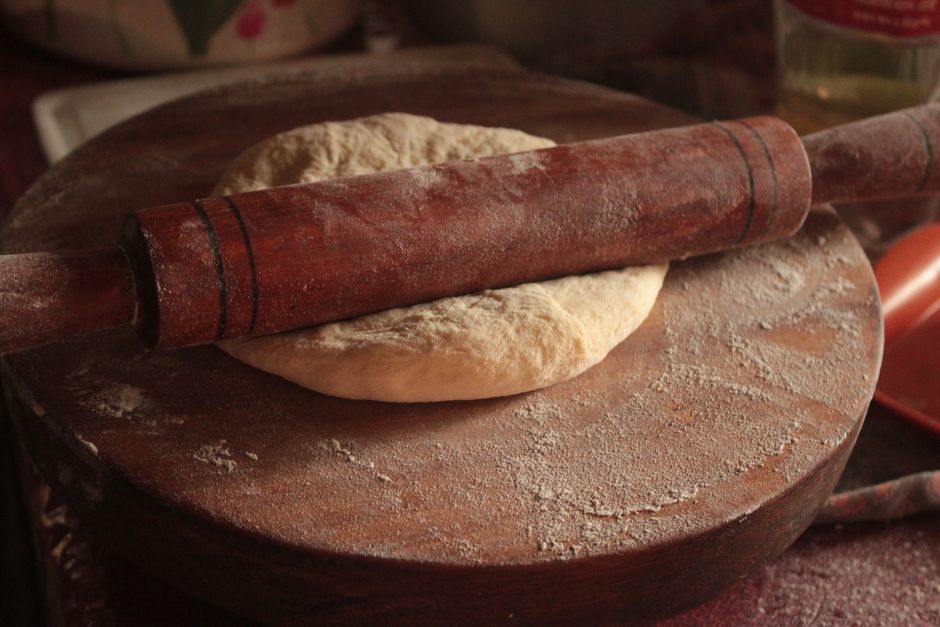
If you process dozens of dough pieces a day in a pizzeria, bakery or catering operation, hand-rolling quickly reaches its limits: it costs time and staff, and rarely delivers an even dough thickness. A professional dough roller sheets pizza dough, yeast dough or shortcrust to a consistent thickness in seconds. In the range: the 52 cm machine as a foldable floor model and the compact 38 cm version as a countertop unit.
Countertop unit or foldable floor model?
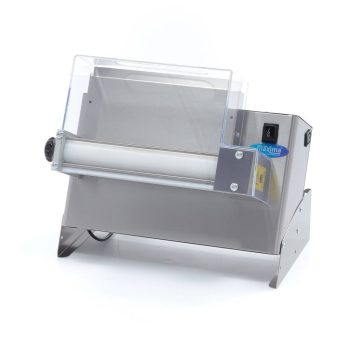
The 38 cm countertop unit sits directly on the worktop and suits smaller kitchens, snack bars or counters where every centimetre counts. It is the typical choice when the machine has to slot into an existing workflow without re-planning the floor space.
The 52 cm floor model stands free on the kitchen floor and is foldable – practical for busy pizzerias: after service, the machine folds away to save space. If you push high volumes in the evening trade but need the floor area during the day, you benefit considerably.
Which roller width do I need?
At 38 cm, the countertop model covers the common pizza sizes and is usually sufficient for normal throughput. The 52 cm version gives headroom – for family-size pizzas, large flatbreads or tarte flambée – and handles larger dough pieces without rework. Rule of thumb: the roller width should sit comfortably above the largest dough diameter you regularly need.
What to look for when buying (footprint, cleaning, throughput)
- Footprint: measure the available floor or worktop space. A countertop unit needs a stable worktop at working height; the floor model needs a level patch of floor – thanks to the folding mechanism, only during operation.
- Cleaning: look for easily accessible rollers and smooth surfaces so that flour residues and dough build-up can be removed quickly every day.
- Throughput: consider how many dough pieces per hour you handle at peak times. The more manual work the machine replaces, the faster it pays for itself.
Below you will find our complete range of professional dough rollers.
More guides for your commercial kitchen
It is also worth a look at our guide to the prep kitchen and our guide to commercial spiral mixers.
Matching Products
-
 MaximaYou save 39%2-Year Warranty
Commercial Fondant Roller - Ø30 cm - Single Roller - Adjustable Thickness
-
 MaximaYou save 42%2-Year Warranty
Commercial Fondant Roller - Ø45 cm - Single Roller - Adjustable Thickness
-
 MaximaYou save 44%2-Year Warranty
Commercial Dough Sheeter - 38 cm - Floor Model - Foldable
-
 MaximaYou save 44%2-Year Warranty
Commercial Dough Sheeter - 38 cm - Table-Top
-
 MaximaYou save 44%2-Year Warranty
Commercial Dough Sheeter - 52 cm - Floor Model - Foldable
-
 MaximaYou save 44%2-Year Warranty
Commercial Dough Sheeter - 52 cm - Table-Top
-
 MaximaYou save 39%2-Year Warranty
Commercial Dough Roller - Ø30 cm - Double Roller
-
 MaximaYou save 39%2-Year Warranty
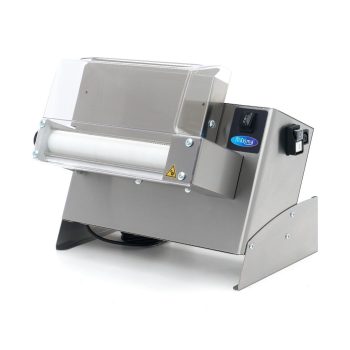
Commercial Dough Roller - Ø30 cm - Single Roller
-
 MaximaYou save 41%2-Year Warranty
Commercial Dough Roller - Ø40 cm - Automatic - Built-in Timer
-
 MaximaYou save 41%2-Year Warranty
Commercial Dough Roller - Ø40 cm - Double Roller
-
 MaximaYou save 42%2-Year Warranty
Commercial Dough Roller - Ø45 cm - Single Roller
-
 SaroYou save 35%
SARO Dough Rolling Machine model TERAMO 1
-
 SaroYou save 35%
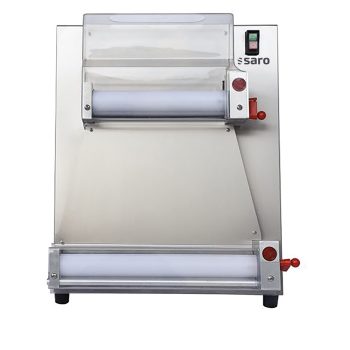
SARO Dough Rolling Machine model TERAMO 2
-
 StalgastYou save 35%
Dough Sheeter, Roller Length 300 mm, 0.5 kW, 510 x 490 x 640 mm (WxDxH)